SPF Record Troubleshooting: Common Errors, Limits and Reliable Fixes
A practical SPF troubleshooting guide covering syntax, multiple-record errors, DNS lookups, include chains, subdomains and safe verification.
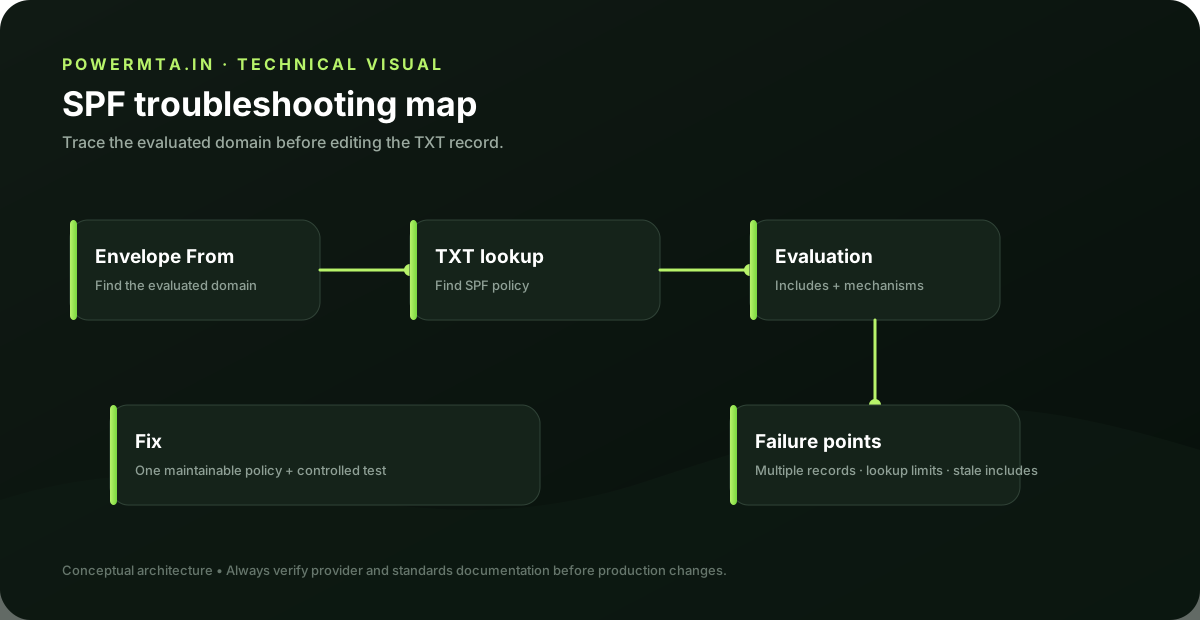
What SPF is actually checking
SPF lets a receiving system compare the connecting sender against the policy published for the envelope-from domain. It is an authorization mechanism, not a complete identity system. DKIM and DMARC solve different parts of the authentication problem.
The most common SPF failure: multiple records
A domain should publish one SPF policy for a given name. Publishing two separate TXT records that both begin with v=spf1 creates an ambiguous policy and can produce a permanent error. The professional fix is to combine authorized mechanisms into one policy rather than adding another SPF record.
DNS lookup limits
SPF evaluation has a limit on DNS-query-causing mechanisms. Long chains of include, a, mx, exists and redirects can push a record over the evaluation limit. A record can therefore look syntactically correct while still failing in production.
A safer troubleshooting workflow
- Identify the exact envelope-from/return-path domain used by the message.
- Retrieve the TXT records for that exact name.
- Confirm there is one SPF policy.
- List every sending provider and infrastructure that genuinely needs authorization.
- Trace
include:chains rather than trusting the top-level record alone. - Remove obsolete providers and consolidate where possible.
- Send a controlled test message and inspect the Authentication-Results header.
What SPF does not prove
SPF does not prove that the visible From address was authorized by itself. Forwarding can also break SPF because the connecting IP may change. This is one reason DKIM and DMARC are important parts of a modern authentication setup.
Subdomains need deliberate treatment
If you send from different subdomains, decide which identity each stream uses and publish the appropriate authentication records. Do not assume that an SPF record on the organizational domain automatically describes every possible sending identity in the way your application expects.
Common bad fixes
- Adding a second SPF record.
- Copying a provider's example without removing unused providers.
- Using broad mechanisms simply because they are convenient.
- Leaving old ESP includes after migrating platforms.
- Treating an SPF pass as proof that the message will reach the inbox.
Verification checklist
- One SPF policy exists at the evaluated domain.
- All legitimate senders are represented.
- Unused providers have been removed.
- The policy stays within SPF evaluation constraints.
- DKIM is enabled as a second authentication path.
- DMARC reports are monitored before enforcement is increased.
A worked example
Imagine a domain sends from Google Workspace and one marketing platform. Instead of publishing separate SPF records, the domain owner needs one policy that authorizes the legitimate services. The exact mechanisms depend on the providers' documentation. After publishing the record, verify the final evaluated policy rather than simply checking that a TXT record exists.
How to recognize an SPF evaluation problem
If a message shows an SPF permanent error rather than a simple fail, investigate the policy itself. Look for multiple SPF records, excessive DNS-querying mechanisms or broken include chains. A provider migration is a common trigger because old includes remain while new ones are added.
What to do after changing SPF
DNS propagation is not the same as SPF evaluation. Query authoritative and recursive DNS from more than one location, then send a controlled message. Compare the Authentication-Results header before and after the change. Keep a record of the previous policy so you can roll back safely if a legitimate sender was missed.
SPF and forwarding
Forwarding can change the connecting IP, which means a message that originally passed SPF may not pass at the next hop. DKIM is valuable here because the signature can survive forwarding when the message is not altered in a way that invalidates it. For that reason, a mature authentication strategy should not depend on SPF alone.
Provider migrations
SPF problems frequently appear during migrations because the new provider is added before the old provider is removed. Build a simple sender inventory with the provider name, purpose, SPF mechanism and date last verified. After a migration, send tests from every remaining application and remove obsolete authorization once you know it is no longer needed.
A disciplined change process
Treat DNS authentication records like production configuration. Record the old value, the new value and the reason for the change. Verify the record at the authoritative DNS service, then verify the behavior in a real message. This is much safer than repeatedly editing a long SPF string until a third-party checker reports green.
What success looks like
A successful SPF configuration is not simply a long TXT record. It is a policy that accurately represents the systems authorized to send for the evaluated domain, remains within evaluation constraints, and works alongside DKIM and DMARC. Keep the record as narrow and maintainable as your real sending architecture allows.
Troubleshooting worksheet
When a message fails SPF, write down five facts before changing DNS: the envelope-from domain, the connecting IP, the published SPF policy, the Authentication-Results header and the application that generated the message. Then compare those facts with your intended sending architecture. This prevents a common mistake: editing the domain record when the real problem is that the application is using a different return-path domain. After the change, repeat the same test and keep the before/after result.
Implementation checklist
- Document the evaluated envelope-from domain and all legitimate senders.
- Keep one maintainable SPF policy per domain.
- Review include chains after provider migrations.
- Verify the record through authoritative and recursive DNS.
- Test with a real message and inspect Authentication-Results.
- Pair SPF with DKIM and DMARC rather than treating SPF as the complete authentication system.
The best SPF record is the smallest policy that accurately describes the real sending architecture. Treat it as configuration that needs ownership and periodic review, not as a static line copied once from a provider.
Sources & further reading
This guide is independently written. The references below are used to verify standards, platform requirements, or product-specific behavior where applicable.