Email Sender Reputation: IP, Domain and Engagement Signals Explained
What sender reputation means
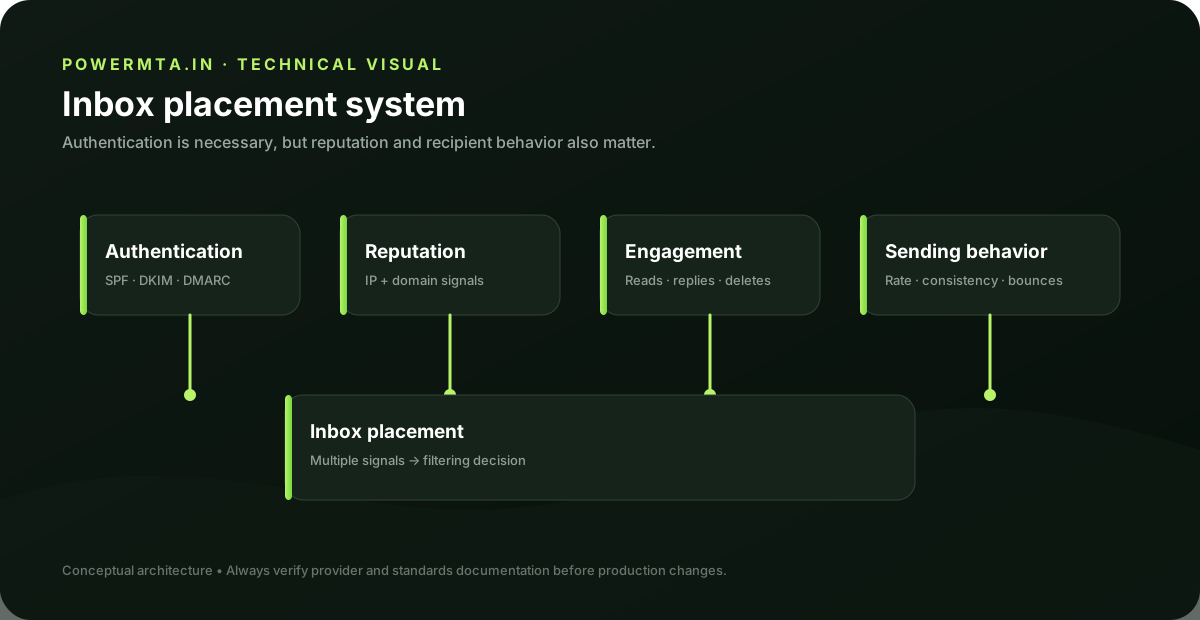
Sender reputation is a broad term for the signals receiving systems use when evaluating mail from an IP, domain or sending identity. It is not a single universal score that every provider calculates in the same way. Different receivers use different models and data. That means reputation work should focus on observable outcomes and controllable inputs: authentication, complaint rates, bounce behavior, sending patterns, list quality, message consistency and recipient engagement.
IP reputation
An IP address can accumulate a history based on the mail sent from it. This is particularly important for dedicated sending infrastructure. A new IP has little history, while a shared IP can reflect activity from many senders. IP reputation should therefore be managed with stable sending patterns and careful list hygiene. Moving traffic between IPs does not automatically solve a reputation problem if the underlying sending behavior remains unchanged.
Domain reputation
Domain-based reputation gives receiving systems another identity with which to associate sending behavior. This is one reason authentication and consistent domain use matter. A sender should avoid treating domains as disposable replacements for poor sending practices. Use clearly separated domains or subdomains where there is a legitimate architectural reason to separate message streams, and document which systems send from each identity.
Engagement and list quality
Repeatedly sending to inactive, invalid or uninterested recipients creates operational problems. Good list management removes hard bounces, respects unsubscribes and avoids repeatedly targeting addresses that never engage. The objective is not to manipulate a receiver's scoring system. It is to send useful mail to recipients who have a legitimate reason to receive it. That produces healthier operational signals and reduces avoidable complaints.
Troubleshooting reputation problems
Start with the evidence: delivery errors, bounce categories, complaint data, authentication results and changes in sending volume. Compare the timing of the problem with recent configuration or campaign changes. Avoid making several major changes at once. A controlled reduction in problematic traffic combined with authentication and list-quality fixes makes it easier to identify what improved the outcome.
Reputation checklist
Maintain authentication, monitor bounces and complaints, remove invalid recipients, honor unsubscribe requests, document sending streams and keep infrastructure identity consistent. Treat sudden delivery deterioration as an incident that needs evidence rather than as a reason to immediately rotate domains or IPs.
Practical checklist
- Record the exact hostname, domain, IP address or SMTP response involved in the issue.
- Change one variable at a time and keep a short change log.
- Verify the result with a real test message and inspect the relevant DNS or SMTP evidence.
- Document the final configuration so the next migration or incident starts with known-good information.
Frequently asked questions
Is there one setting that guarantees successful delivery?
No. Email delivery depends on the complete sending path, including infrastructure, authentication, recipient policy, message handling and operational practices.
Should I change several settings at once when troubleshooting?
Usually no. Controlled changes make it easier to identify the cause and confirm whether the fix actually worked.