Domain Warm-Up vs IP Warm-Up: What Is the Difference?
Two different identities
IP warm-up focuses on the sending history associated with a new or changed IP address. Domain reputation focuses on the sending identity represented by the domain. Modern email systems can evaluate both, so changing one does not erase the history or behavior associated with the other. This is why simply moving a domain to a new IP is not a universal reputation reset. The receiving system can still associate the new traffic with the domain and its sending patterns.
IP warm-up
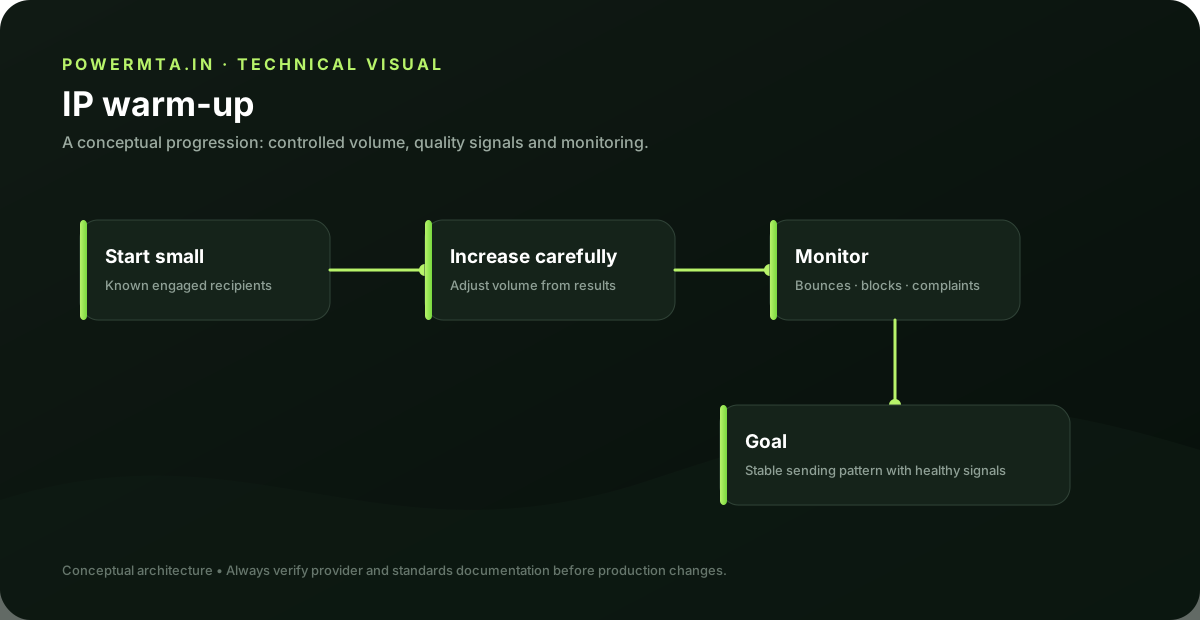
A new IP benefits from controlled traffic because the sender can observe how receiving systems respond before moving the full production workload. The exact volume schedule depends on the audience, traffic pattern and destination mix. Avoid copying a fixed schedule without considering your actual mail stream. A small transactional sender and a large newsletter program have different operational characteristics.
Domain consistency
Domain warm-up is less about a mechanical schedule and more about establishing consistent, legitimate sending behavior. Keep authentication stable, use the domain consistently and avoid sudden unexplained changes in message volume or identity. When introducing a new domain, make sure the domain is properly authenticated and that recipients have a clear reason to receive the mail.
A combined migration
For an IP migration, authenticate the new IP and domain first, test a small portion of traffic, monitor delivery and gradually increase the share. Keep enough of the old path available to compare outcomes. If the domain is also changing, the migration has two identity changes and should be treated as a higher-risk project. Document each change separately so a delivery problem can be traced.
What to monitor
Track accepted, deferred and rejected messages, bounce categories, complaint signals where available, authentication results and destination-specific behavior. Monitoring should be tied to the sending stream so that a problem is not hidden by aggregate totals.
Common warm-up mistakes
The most common mistakes are sending too much too quickly, changing domain and IP simultaneously without a test plan, ignoring list quality, and assuming that a warm-up schedule can compensate for poor sending practices. Warm-up is a controlled migration technique, not a substitute for good email operations.
Practical checklist
- Record the exact hostname, domain, IP address or SMTP response involved in the issue.
- Change one variable at a time and keep a short change log.
- Verify the result with a real test message and inspect the relevant DNS or SMTP evidence.
- Document the final configuration so the next migration or incident starts with known-good information.
Frequently asked questions
Is there one setting that guarantees successful delivery?
No. Email delivery depends on the complete sending path, including infrastructure, authentication, recipient policy, message handling and operational practices.
Should I change several settings at once when troubleshooting?
Usually no. Controlled changes make it easier to identify the cause and confirm whether the fix actually worked.