DMARC Monitoring Guide: From p=none to Enforcement Without Breaking Mail
A practical DMARC rollout guide explaining reports, alignment, monitoring and a staged path from observation to enforcement.
Why DMARC should be rolled out deliberately
DMARC gives a domain owner a policy framework for messages that fail authentication and alignment. The safest rollout is based on visibility first: identify legitimate senders, fix authentication gaps, and only then increase enforcement.
Start with inventory, not policy
Before changing DMARC, list every system that can send mail using your domain: Google Workspace, transactional platforms, CRM tools, website forms, marketing platforms, support systems and legacy applications. Many DMARC incidents happen because an old system was forgotten.
What reports are for
Aggregate reports can show which sending sources are authenticating and whether messages align with the domain. They are most useful when treated as an operational data source rather than a one-time setup task. Review the sources, investigate unexpected senders and update your authentication inventory.
A staged rollout
- Begin with a monitoring policy such as
p=nonewhile you learn your legitimate traffic. - Fix SPF/DKIM authentication and alignment for known senders.
- Continue monitoring until the reports make sense.
- Move to a limited quarantine percentage when appropriate.
- Increase enforcement gradually and continue watching legitimate traffic.
- Use
p=rejectonly when you understand the consequences for your sending ecosystem.
Alignment matters
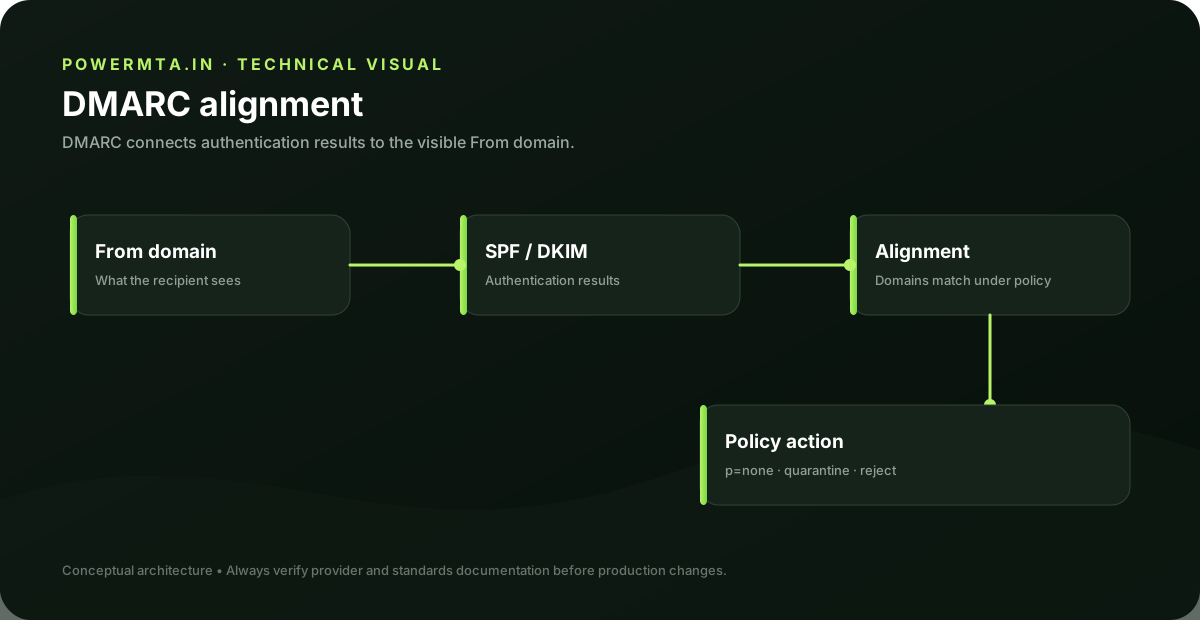
A message can pass SPF or DKIM and still fail DMARC if the authenticated domain does not align with the visible From domain under the selected alignment mode. When troubleshooting, inspect the From domain, SPF authenticated domain and DKIM signing domain together.
What not to do
- Jump straight to strict enforcement without inventorying senders.
- Ignore third-party services that send as your domain.
- Treat a DMARC record as a substitute for DKIM and SPF.
- Stop reviewing reports after the first week.
- Assume a DMARC pass means the message is guaranteed to reach the inbox.
Operational checklist
- Maintain a sender inventory.
- Review aggregate reports regularly.
- Document each sending domain and selector.
- Separate transactional and promotional streams where useful.
- Record policy changes and the reason for each change.
What to record from reports
A useful DMARC workflow records the sending source, authenticated domain, disposition and alignment result. The objective is to build a map of legitimate senders and identify unexpected sources. Do not automatically reject every unfamiliar source; first determine whether it is a forgotten vendor, forwarding service, legitimate subdomain or unauthorized sender.
When to increase enforcement
Increase enforcement when the authentication inventory is stable and the reports show that legitimate mail is consistently aligned. Make one policy change at a time and monitor the result. If legitimate mail is affected, identify the source and fix its authentication rather than permanently weakening the policy without understanding the cause.
Subdomains and organizational domains
DMARC behavior can involve both the exact From domain and organizational-domain policy inheritance. Document which domains are used for transactional mail, marketing mail and employee mail. This prevents a single broad policy change from unexpectedly affecting a specialized subdomain.
Incident response
If reports suddenly show a large volume of unauthenticated mail using your domain, treat it as an investigation. Confirm whether the traffic is legitimate, review authentication records and look for signs of spoofing. DMARC reporting is most useful when it is connected to a documented response process.
A useful reporting routine
Set a recurring review process rather than treating DMARC as a one-time DNS task. Compare the previous period with the current period, investigate new sources, and document changes in legitimate senders. This turns aggregate reports into a practical inventory of your email ecosystem.
Third-party senders
Marketing platforms, support systems, CRM products and transactional providers often send on behalf of a brand. Each should be documented. If a vendor cannot authenticate its messages with an identity that fits your DMARC strategy, decide whether the vendor should use a dedicated sending subdomain or another supported configuration.
The end state
The goal is not simply to publish a strict DMARC policy. The goal is to know which systems are authorized, have them authenticate correctly, monitor unexpected sources and apply enforcement in a way that protects legitimate mail. The policy is the final expression of that operational control.
Troubleshooting worksheet
For a DMARC anomaly, record the visible From domain, SPF domain and result, DKIM domain and result, DMARC disposition, sending source and date range. Group the reports by source before changing policy. If a source is legitimate, fix its authentication. If it is not recognized, investigate it as an unauthorized sender rather than weakening the policy simply to make the report look cleaner.
Implementation checklist
- Maintain a current sender inventory.
- Collect and review aggregate reports.
- Document SPF and DKIM alignment for each sender.
- Fix legitimate sources before increasing enforcement.
- Change one policy variable at a time.
- Keep an incident record for unexpected sources or delivery changes.
A DMARC program is most effective when it is treated as an ongoing identity-management process. The DNS record is only the visible policy; the inventory and monitoring process underneath it are what make enforcement safe.
Before enforcement
Before moving beyond monitoring, make sure every important sending source has an owner and a documented authentication path. Unknown sources should be investigated, not ignored. A staged policy is valuable because it gives the operator time to discover forgotten senders before a stricter receiver action affects legitimate mail.
Sources & further reading
This guide is independently written. The references below are used to verify standards, platform requirements, or product-specific behavior where applicable.